Three acronyms now describe the work of being found online. They overlap a lot, and most of the confusion comes from treating them as separate projects with separate vendors. Here is what each one means, how each is measured, and how they fit together.
The short version
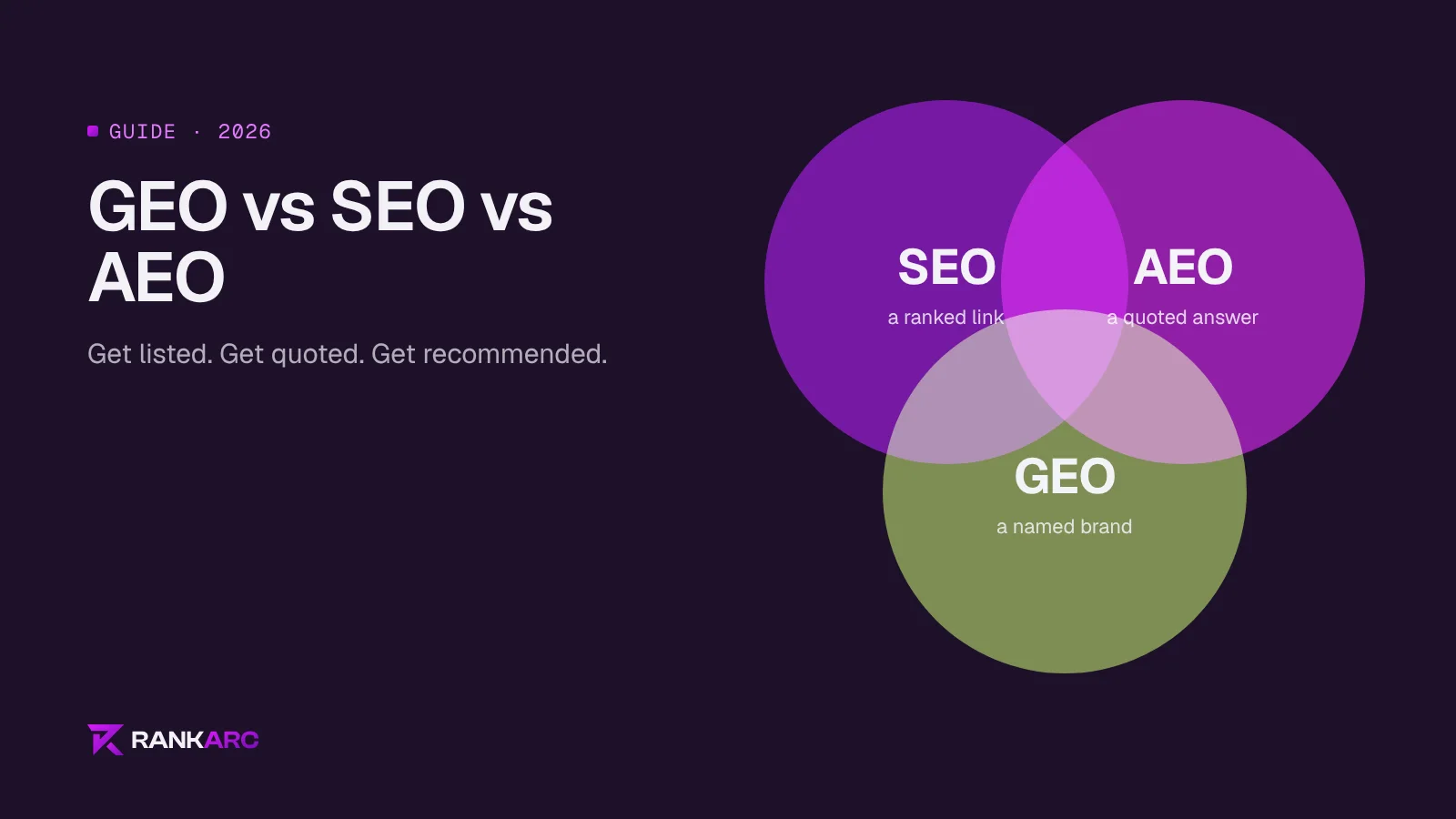
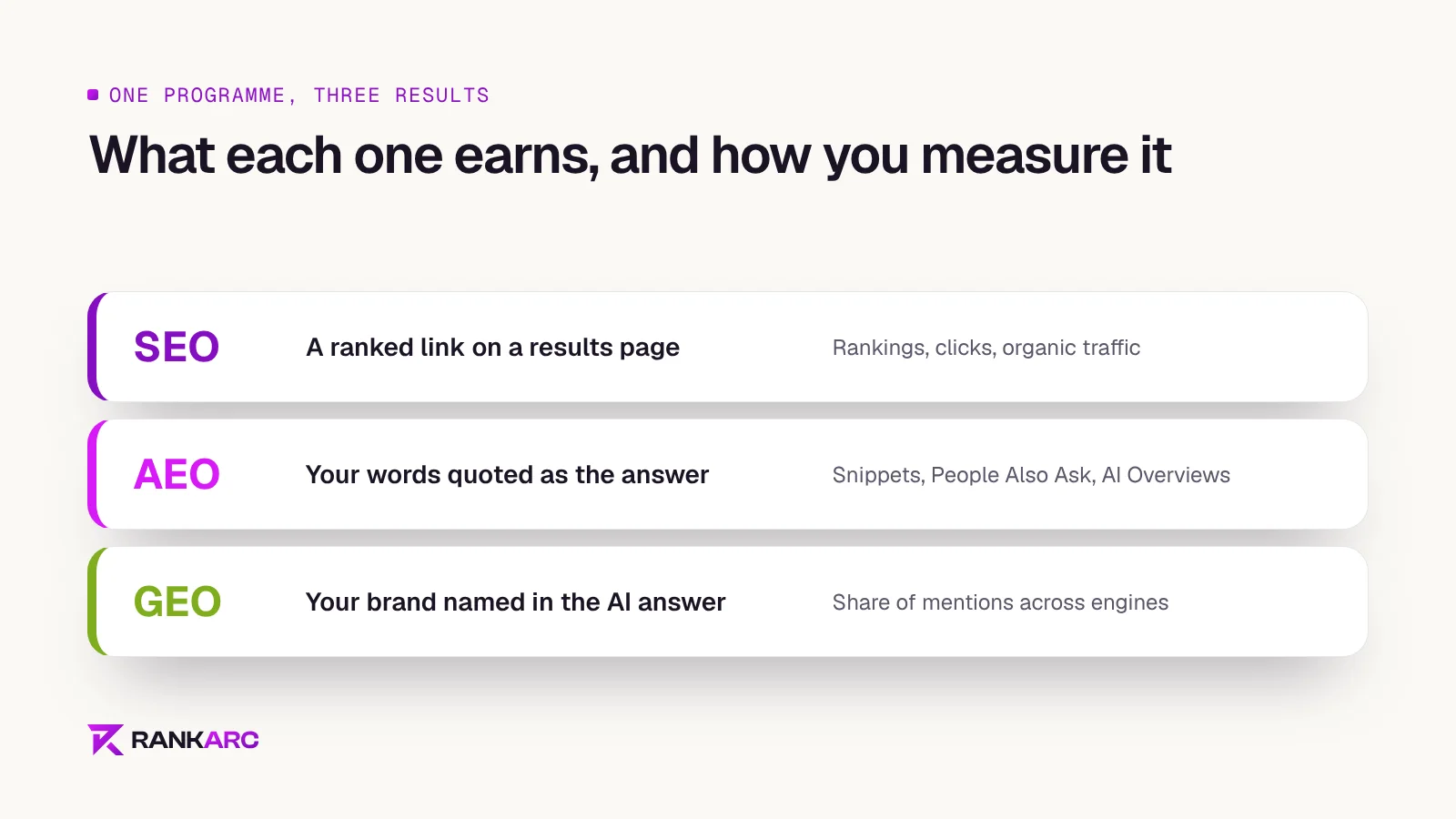
- SEO (search engine optimisation) earns a ranked link on a search results page.
- AEO (answer engine optimisation) makes your content easy for an engine to lift a direct answer from, such as a featured snippet, a voice answer or a passage in an AI Overview.
- GEO (generative engine optimisation) gets your brand named inside the answer an AI assistant writes, in ChatGPT, Gemini, Perplexity, Claude or Copilot.
SEO gets you on the list. AEO gets your words quoted. GEO gets your name recommended.
SEO: ranking a page
SEO is the foundation the other two stand on. It covers:
- Technical health: crawling, indexing, speed, mobile, redirects
- On-page work: titles, headings, content that matches what people search
- Authority: links and mentions from other sites
How it is measured: rankings, impressions, clicks and organic traffic in Google Search Console and tools such as Ubersuggest or Ahrefs.
Why it still matters: AI assistants that search the web tend to read pages that already rank. Google's AI Overviews draw on the normal Search index. A site that Google cannot crawl or does not trust rarely shows up in AI answers either.
AEO: being the quoted answer
AEO focuses on the shape of your content. Engines lift short, self-contained passages that answer a question. AEO work includes:
- Putting a two or three sentence answer at the top of a page
- Writing headings as the questions people ask
- FAQ sections and FAQPage schema
- Clean structured data so the engine knows what each page is
How it is measured: featured snippets, People Also Ask boxes, and appearances inside Google's AI Overview.
Example: DVAI Studio's guide to embroidered shirts for women now ranks first on Google for "can women wear embroidered shirts to work" and appears inside the AI Overview for that search. The page leads with a direct answer.
GEO: being the recommended brand
GEO is about whether an AI assistant names you when someone asks which brand, product or service to choose. It depends on:
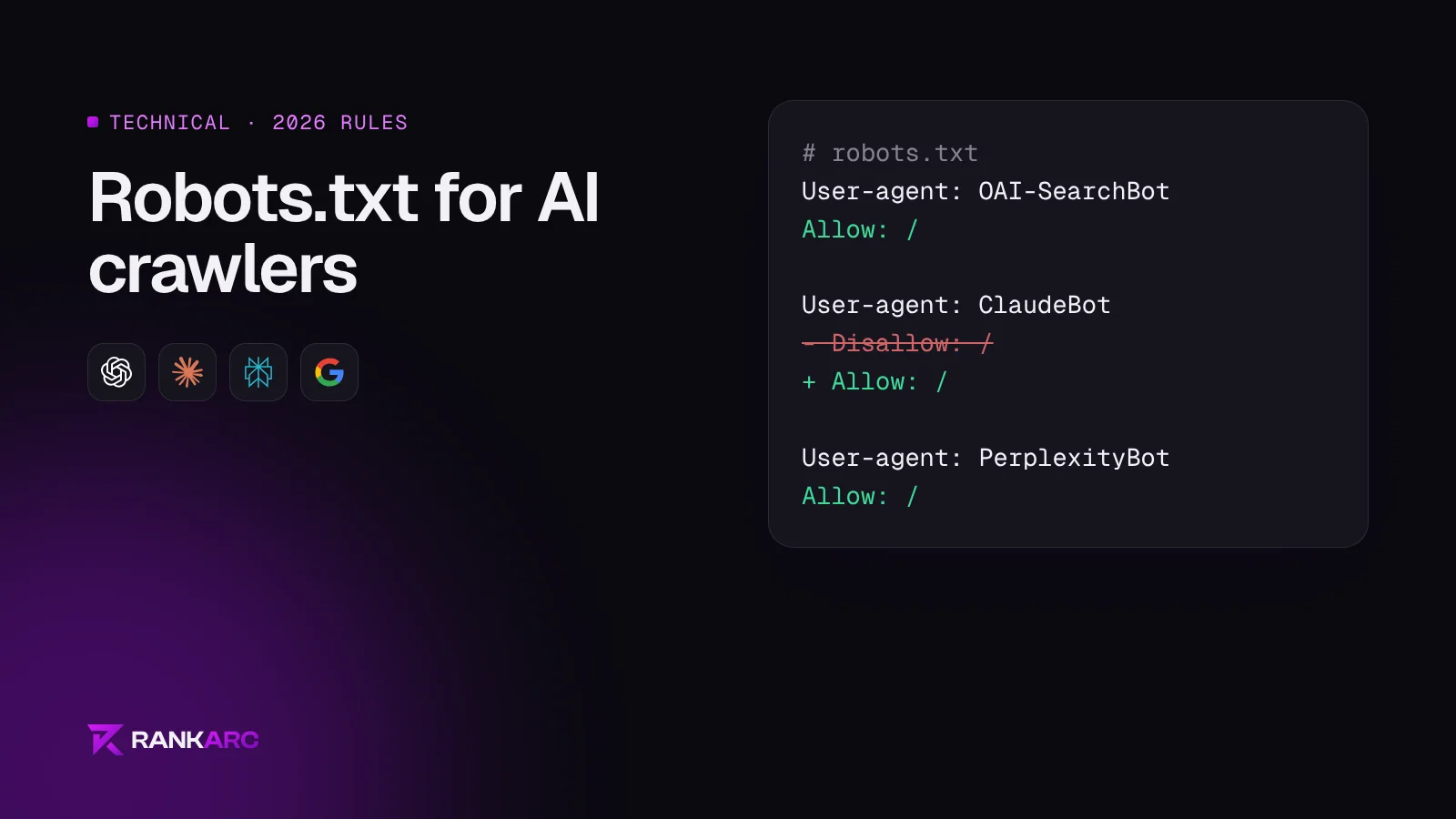
- Access: AI search crawlers such as OAI-SearchBot and Claude-SearchBot can read your site
- Clarity: the engine can tell what you sell, from schema, consistent facts and plain product names
- Corroboration: trusted third-party sources mention you, so the model sees agreement
- Coverage: pages that answer the specific, long questions buyers ask assistants
How it is measured: share of voice across a fixed set of prompts. You run the same 15 to 60 buyer questions through each engine every month and record how often you are named, in what position and next to which competitors.
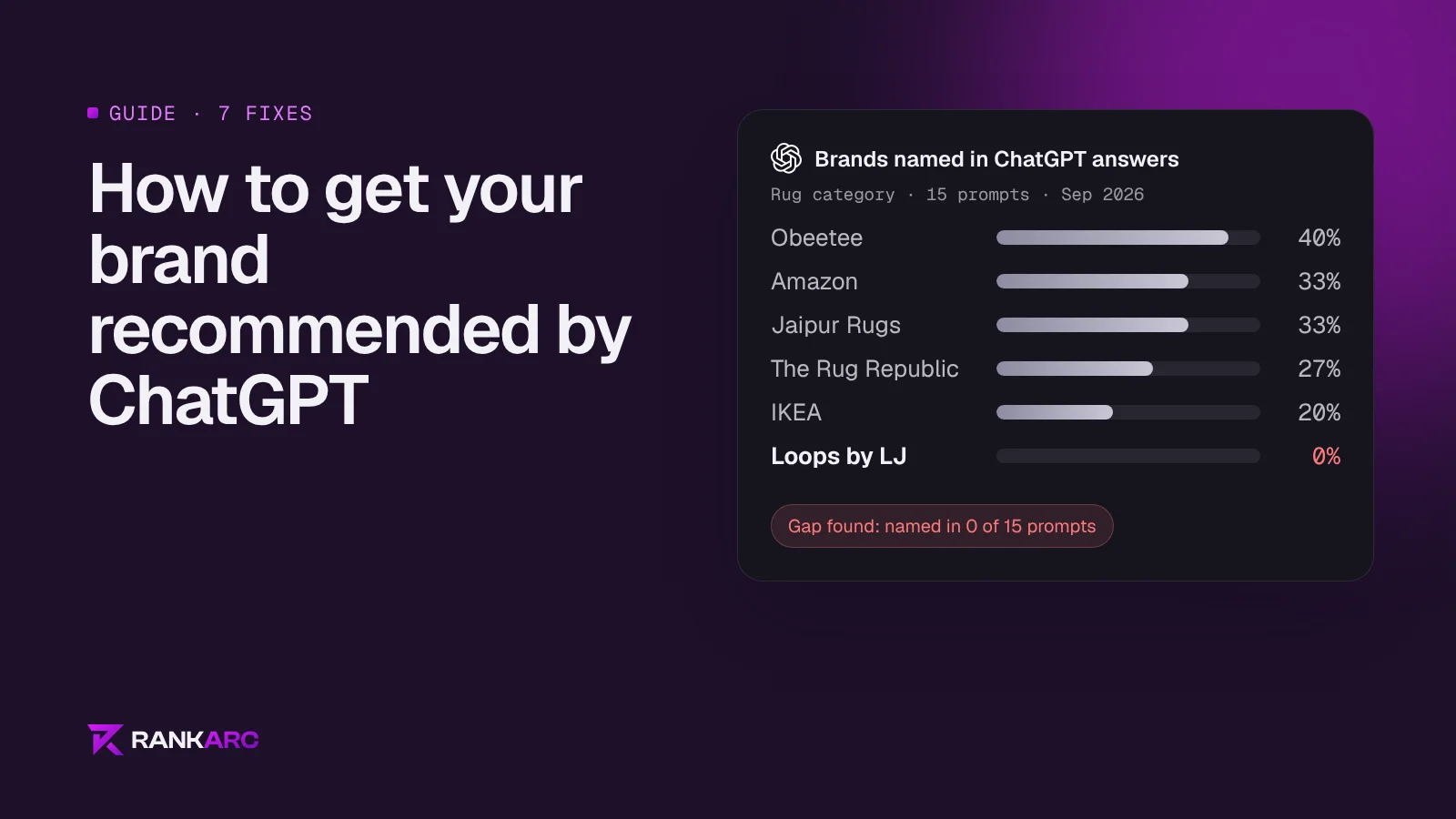
Example: in September 2026, Loops by LJ, a Shopify rug brand, was named in 0 of 15 ChatGPT prompts about its own category, while Obeetee was named in 40%. That is the baseline its GEO work is measured against.
Where they overlap
| Work | SEO | AEO | GEO |
|---|---|---|---|
| Fix crawling and indexing | Yes | Yes | Yes |
| One clear H1 per page | Yes | Yes | Yes |
| Answer-first content | Helps | Yes | Yes |
| Schema markup | Helps | Yes | Yes |
| Allow AI crawlers in robots.txt | No | Partly | Yes |
| Third-party mentions | Links | Helps | Yes |
| Track prompts across AI engines | No | No | Yes |
Most of the work counts three times. A clear H1 helps Google rank the page, helps an engine lift an answer from it and helps an assistant understand what you sell. That is why we run all three as one programme.
Which one should you start with?
Start with whatever is broken at the base. In our audits the order is almost always:
- Unblock: robots.txt, indexing, broken templates. A menswear brand we audited ranked first on Google for a 450,000-search keyword while blocking five AI crawlers.
- Clarify: headings, titles, schema, consistent facts.
- Answer: pages for the questions buyers ask.
- Corroborate: mentions on the sources engines trust.
Results show up in SEO metrics first, because Google data is fast and visible. EatProt had 20 of 21 tracked keywords in Google's top 5 after one month of on-page and indexing work. GEO results build on top of that foundation.
Questions
Is GEO replacing SEO?
No. GEO sits on top of SEO. AI assistants that search the web mostly read pages that are already crawlable and trusted, so weak SEO limits GEO.
Do I need separate content for GEO?
Usually not. The same page can rank on Google, be quoted in an AI Overview and be cited by ChatGPT if it answers the question clearly, uses accurate schema and is backed by other sources.
How long does GEO take to show results?
Crawler and schema fixes take effect within days. Being named more often across engines usually takes one to three months, depending on how much third-party coverage the brand already has.
How do I measure GEO?
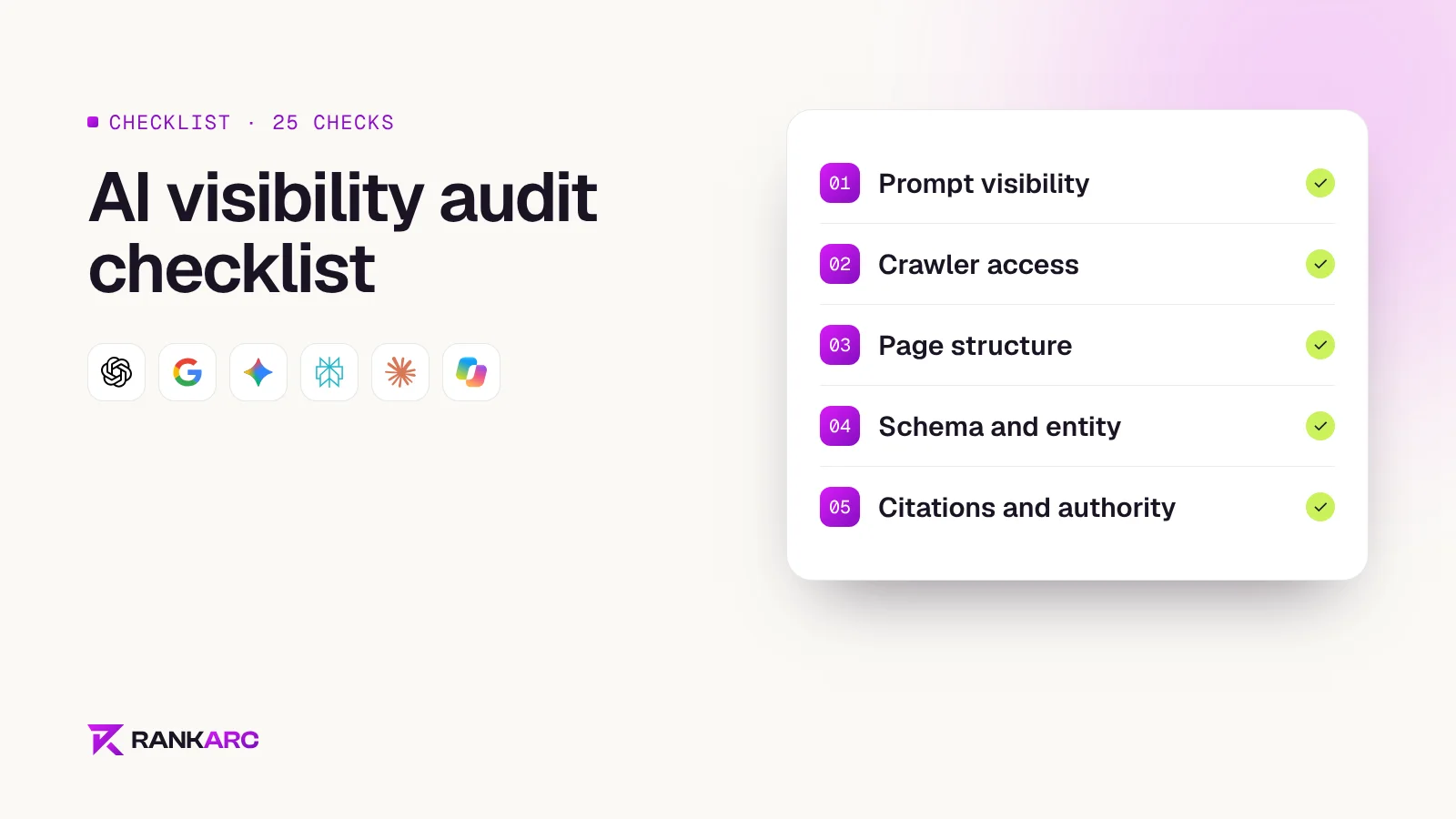
Pick a fixed set of buyer prompts, run them through ChatGPT, Gemini, Perplexity, Claude, Copilot and Google AI Overviews each month, and track how often you are named. Our free AI visibility audit sets up that baseline for you.