ChatGPT now has more than 900 million weekly users, according to OpenAI's February 2026 figure. A growing share of them ask it what to buy: which rug suits a 12 by 15 foot living room, which protein spread has no dairy, which bridal saree brand to trust in Kerala. ChatGPT answers with a short list of names. If your brand is not on that list, the buyer never visits your site.
This guide covers why ChatGPT picks the brands it picks, and the order we fix things in when a brand comes to us invisible.
Why ChatGPT names some brands and not others
When a question needs current information, ChatGPT searches the web, reads a handful of pages and writes an answer from them. Three things decide whether you are in it:
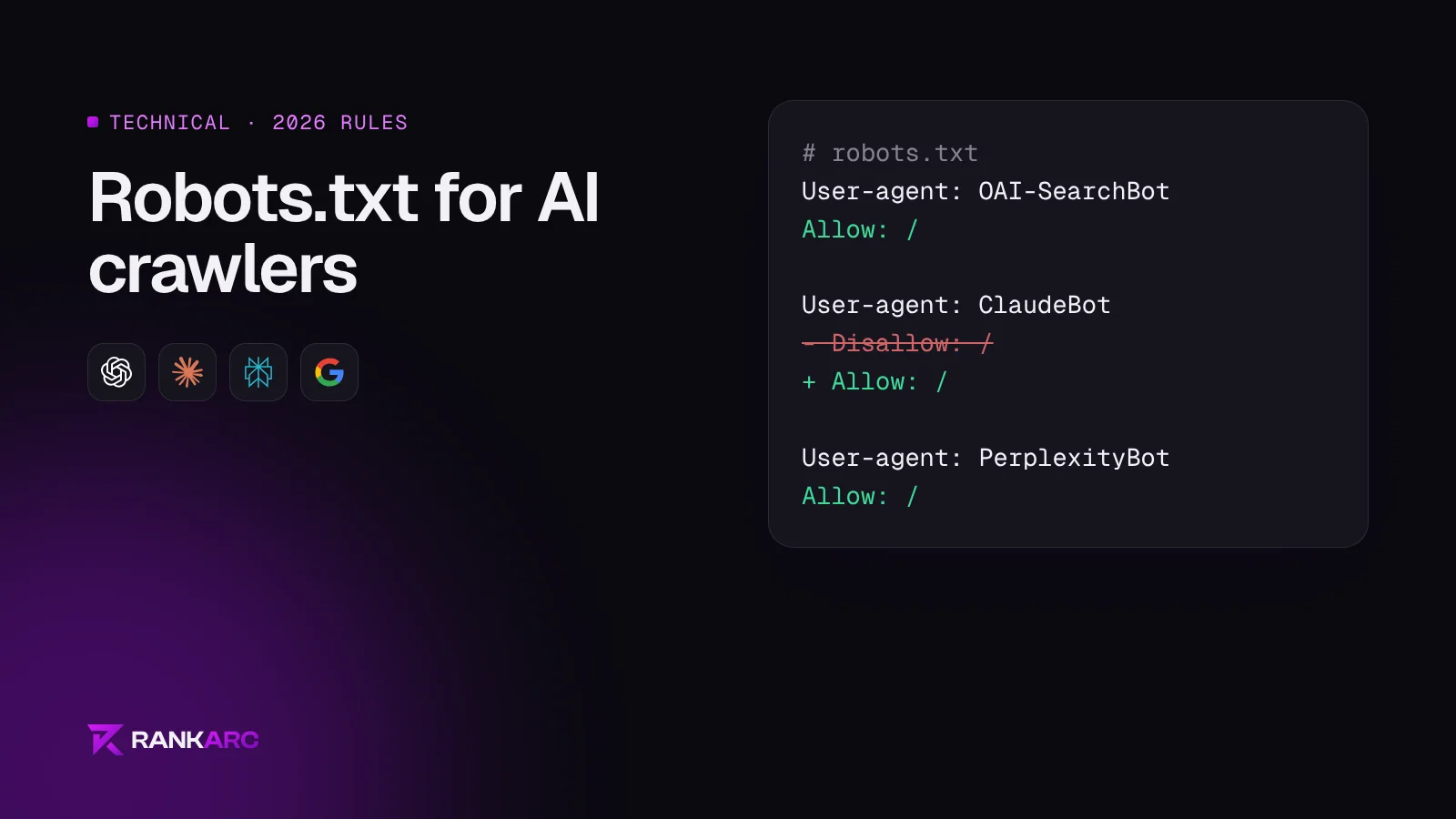
- Can it read your site? If your robots.txt blocks OpenAI's search crawler, your pages cannot be fetched or cited.
- Can it understand what you sell? Clear headings, product data and structured markup tell it what each page is about.
- Do other sources agree? Models lean on third-party lists, reviews and articles to decide whether a brand is safe to recommend.
Most brands fail on at least one. Here is what that looks like in practice.
A Kerala bridal brand ranks at position 1 on Google for "christian bridal wear", a search with 9,900 monthly queries. Across 15 ChatGPT prompts about its own category, it was named zero times.
Google has years of links and click data on that brand. ChatGPT had nothing it could read and verify, so it named eight competitors instead, several of which rank below it on Google.
Step 1: Let OpenAI's crawlers in
Open yoursite.com/robots.txt and look for these names:
- OAI-SearchBot builds the index ChatGPT search uses. OpenAI says sites that block it will not appear in ChatGPT search answers.
- ChatGPT-User fetches a page when a user asks ChatGPT to look at it.
- GPTBot collects content that may be used to train future models.
If any line under these says Disallow: /, that is your first fix. We recently audited an Indian menswear brand that ranks first on Google for "kurta for men", a 450,000-search keyword. Its robots.txt blocked GPTBot, ClaudeBot, CCBot, anthropic-ai and Applebot-Extended across the whole site. The fix took under an hour. Our robots.txt guide for AI crawlers has the exact rules.
Step 2: Give every page one clear H1
This sounds basic. It is also the most common problem we find. When we audited Loops by LJ, a Shopify rug brand, 165 of 530 pages had no H1 at all, including the homepage and every product page. Engines were left to guess what the most important pages were about.
Each page should have one H1 that names the thing on it in plain words: "Hand-tufted wall rugs", not "Forms and textures".
Step 3: Add schema that matches what you sell
Structured data tells engines exactly what a page holds. For most brands the minimum is:
- Organization on the homepage, with your name, logo, URL and links to your social profiles
- Product with Offer on every product page, including price and currency
- FAQPage where you answer real buyer questions
- Article on guides and blog posts
- BreadcrumbList so the site structure is clear
Make sure the facts match everywhere. On one decor site we found the copy calling a sculpture "marble dust" while the specs said "fibre glass", and trust badges saying 12,000 customers on one page and 5,000 on another. Engines read this literally and trust the brand less.
Step 4: Write answers the way buyers ask
Look at the questions buyers type into ChatGPT, not the keywords they type into Google. They are longer and more specific:
- "Which hand tufted rugs are best for a living room in India under ₹10,000?"
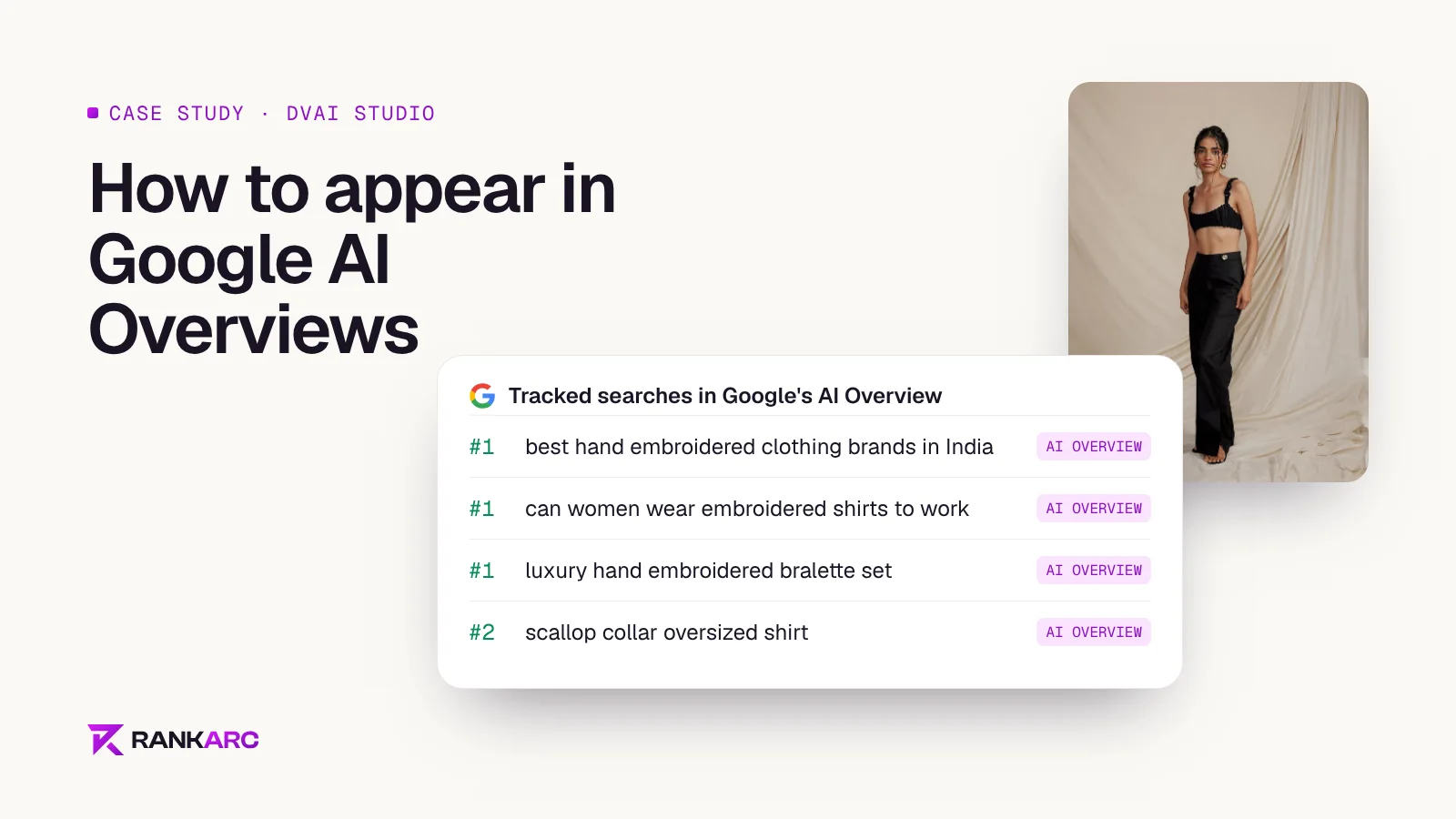
- "Can women wear embroidered shirts to work?"
- "What is a good high-protein paneer alternative?"
Answer each one on a page that leads with the answer in two or three plain sentences, then backs it up. DVAI Studio published a guide to choosing embroidered shirts that now ranks first on Google for "can women wear embroidered shirts to work" and appears inside Google's AI Overview for it.
Step 5: Get named on the sites engines trust
ChatGPT rarely recommends a brand only because the brand's own site says it is good. It looks for agreement: best-of lists, editorial roundups, review sites and directories in your category. For a rug brand that means interior design publications and festive decor guides. For a food brand it means nutrition sites and recipe roundups.
Start with the sources ChatGPT already cites for your category. Ask it your buyers' questions, note the URLs it links to, and work out how to get mentioned on those pages or ones like them.
Step 6: Publish an llms.txt file
An llms.txt file is a plain Markdown map of your best pages for AI agents. Be realistic about it: adoption is still low, and there is no published evidence yet that it raises citation rates. It takes ten minutes, though, and Shopify now serves one for every store by default, so it is worth making yours accurate.
Step 7: Measure it every month
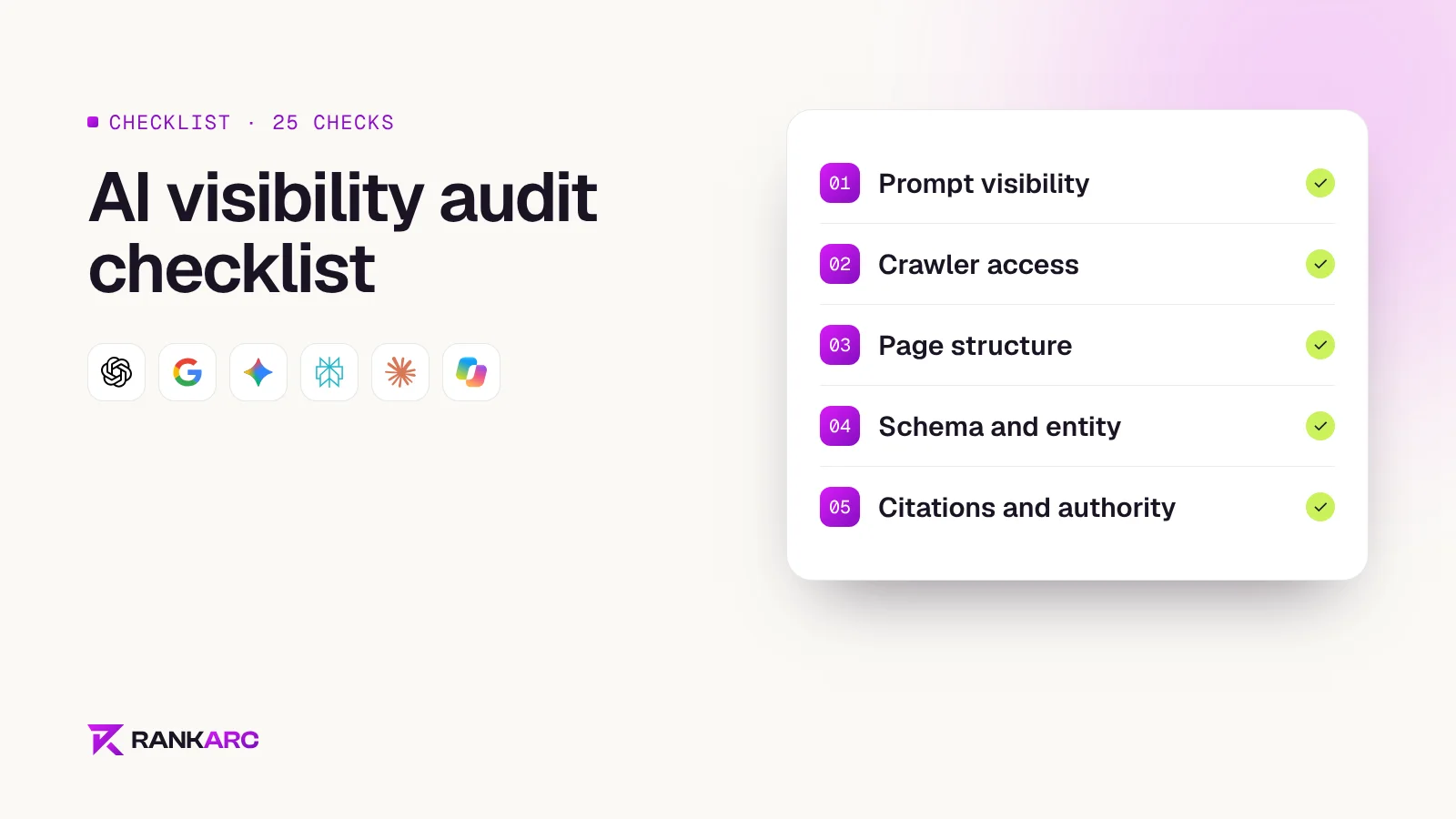
You cannot improve what you do not track. Pick 15 to 60 prompts your buyers really ask, run them through ChatGPT, Gemini, Perplexity, Claude, Copilot and Google AI Overviews every month, and record:
- Whether your brand is named
- Its position in the answer
- Which competitors are named instead
- Which sources the engine cites
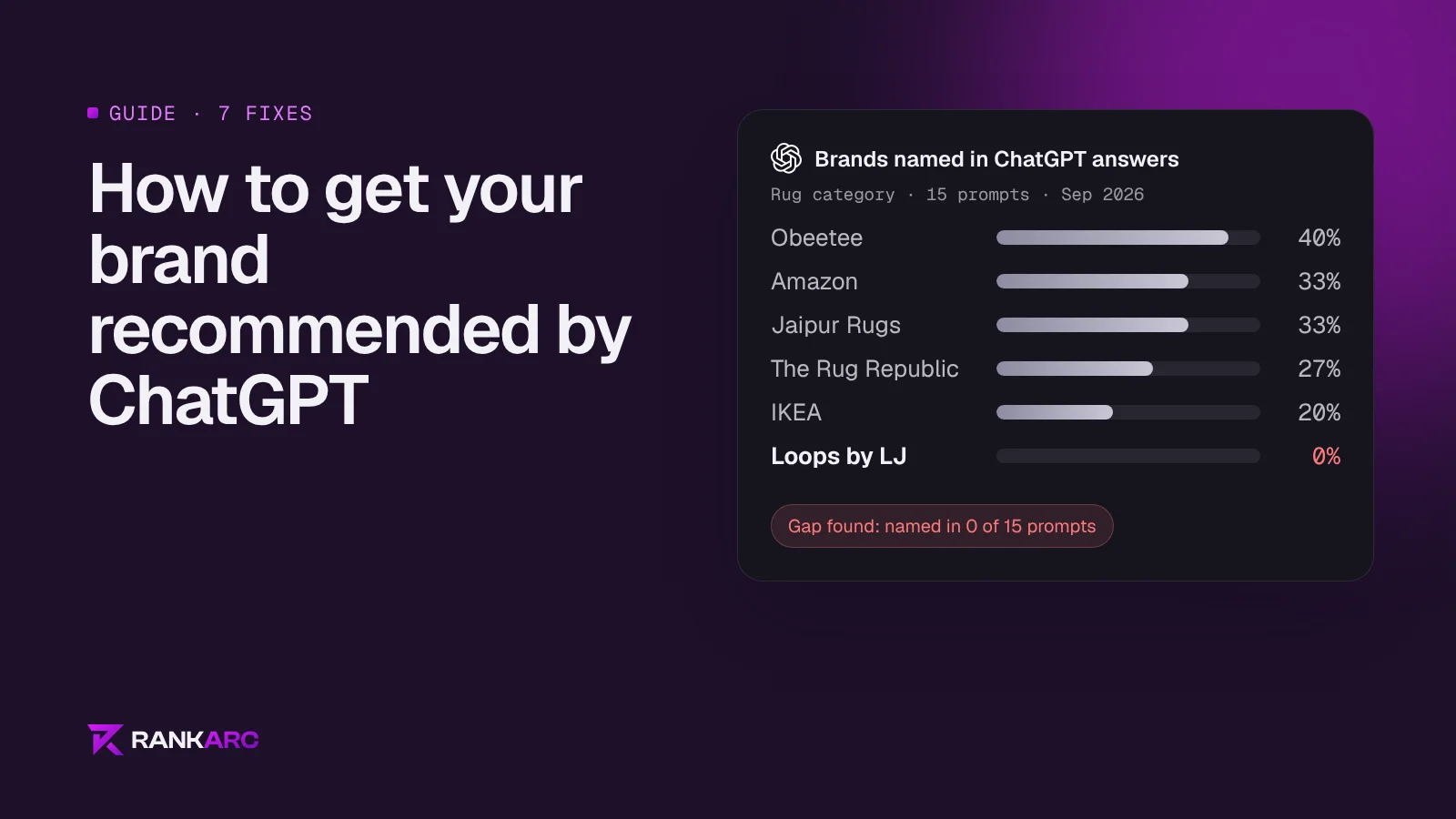
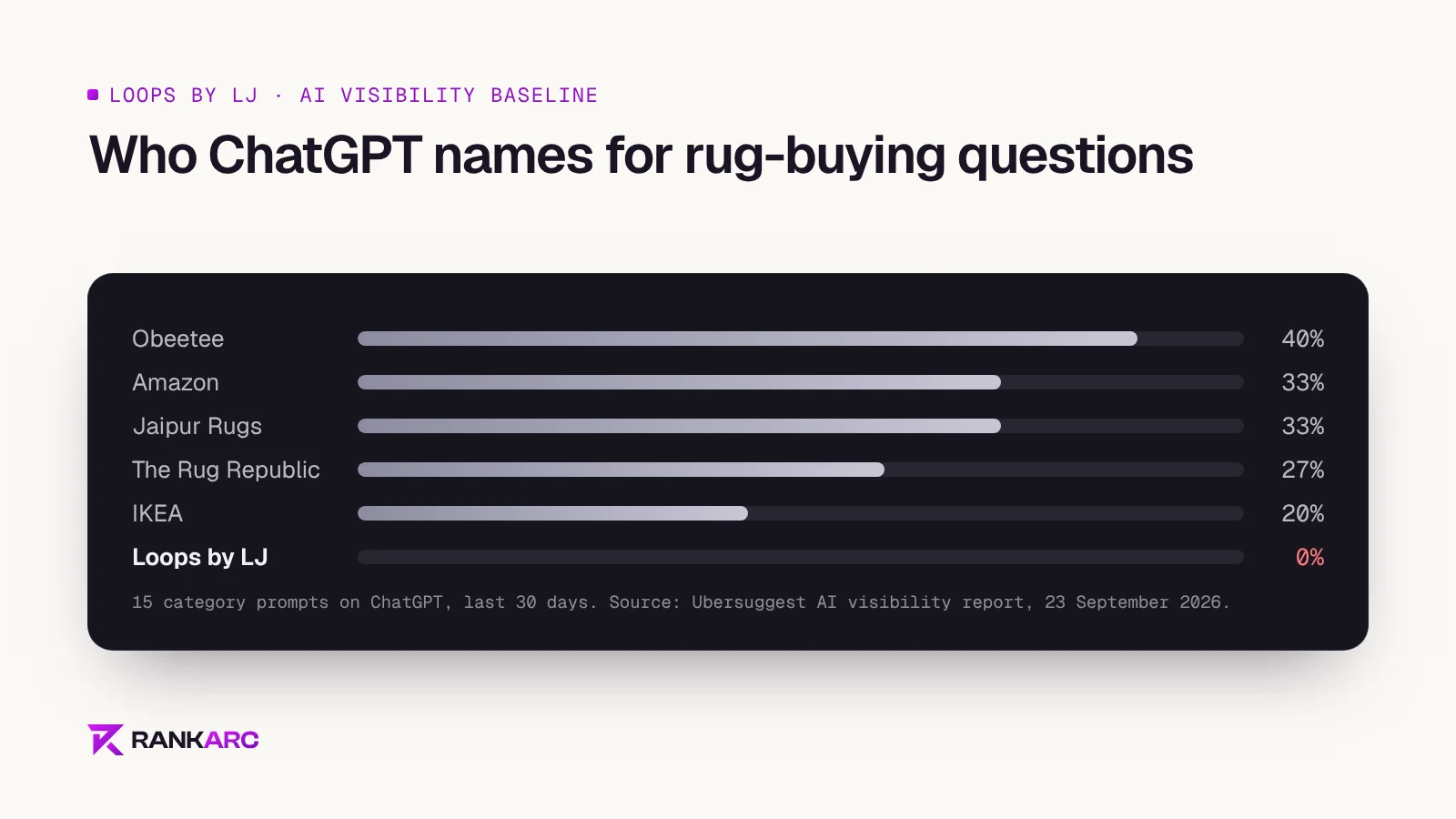
This is your share of voice in AI search. For Loops by LJ the starting point was 0 of 15 prompts, with Obeetee named in 40% of answers and Jaipur Rugs in 33%. That baseline is what every later month is measured against.
How long does it take?
Crawler and schema fixes are live within a week. ChatGPT search respects robots.txt changes in about 24 hours, according to OpenAI's documentation. Content and citations take longer: expect weeks for new pages to be picked up and months for third-party mentions to build.
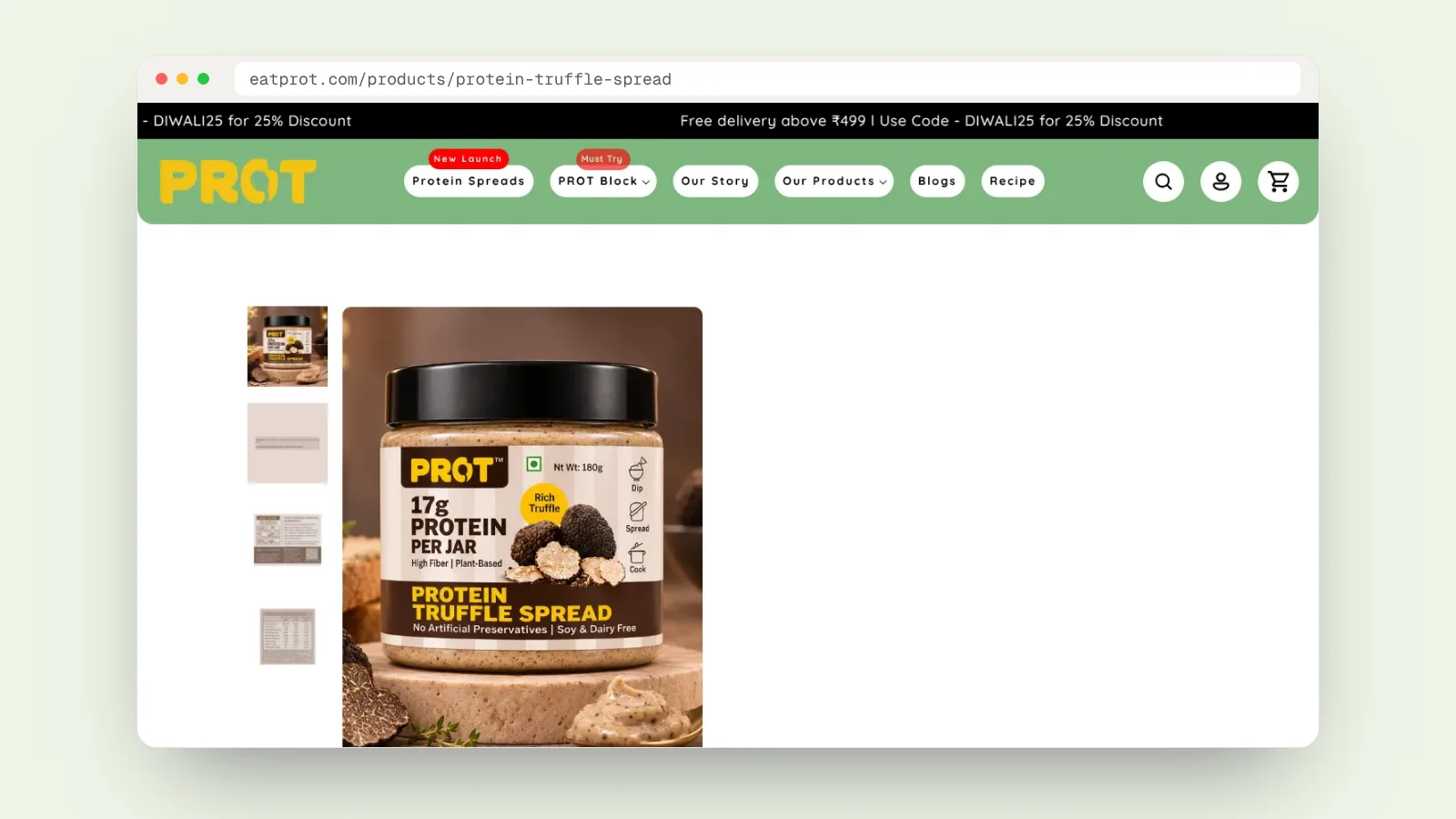
Classic SEO moves in parallel. Loops by LJ went from about 211 to 640 estimated monthly organic visits in 8 weeks after the template and on-page fixes, and EatProt had 20 of 21 tracked keywords in Google's top 5 after one month.
Questions
Can I pay to be recommended by ChatGPT?
No. As of November 2026 there is no paid placement inside ChatGPT's organic answers. Visibility comes from being readable, accurate and cited by sources the model trusts.
Does ranking on Google mean ChatGPT will recommend me?
Not on its own. Google rank helps, because ChatGPT often reads pages that rank well, but we regularly find brands at position 1 on Google that ChatGPT never names.
Which AI crawler matters most for ChatGPT?
OAI-SearchBot. It builds the index ChatGPT search draws on, and OpenAI says sites that block it will not appear in ChatGPT search answers.
How do I check if ChatGPT recommends my brand?
Ask it the questions your buyers ask, in a logged-out or temporary chat, and note which brands it names. Repeat each question a few times, because answers vary. Our free AI visibility audit does this across six engines and sends you the results.